
Inglewood Local
Wood Fencing for South Bay Properties
Cedar, redwood, and pine installations built to handle the coastal climate and last without constant maintenance.
Request an estimate
Tell us what you need
Three fields. It reaches a person here, not a call centre.
Wood Fencing That Holds Up Outdoors
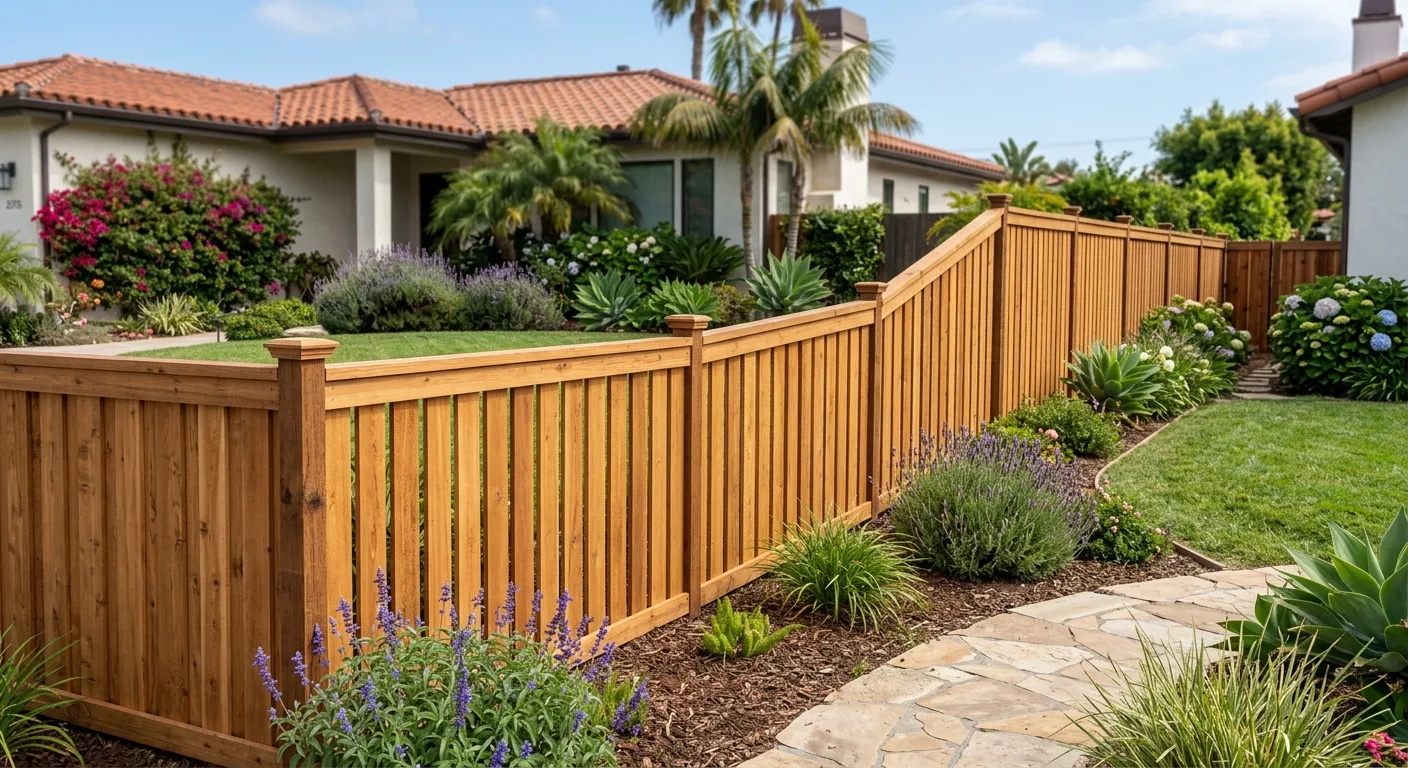
Wood fencing is one of the most searched exterior upgrades for a reason: it delivers privacy, property definition, and curb appeal in a single project. The problem is most installations look fine on day one and start failing by year three because the posts weren't set deep enough, the wrong wood species was used for the climate, or the boards were nailed without proper gapping. Atomic Renovations handles wood fencing as a full exterior installation, not a handyman side job. If you're in the South Bay and want a fence that doesn't wobble after the first winter rain, request an estimate now.
What drives cost on a wood fencing job is straightforward: linear footage, wood species, fence height, and whether the existing posts or old fence need to come out first. Cedar and redwood hold up better than pine in coastal Southern California climates, but they cost more per board. A basic dog-ear pine fence on a flat lot runs a different number than a custom cedar board-on-board on a sloped property with demo included. If your project includes a demolition and grading phase before installation, that scope gets priced separately. Every job is different, contact Atomic Renovations for an accurate estimate.
Wood Types
Which Wood Species Actually Survives LA Climates Survives
The species choice is the single decision that most determines how long your fence lasts.
Cedar
Western red cedar is the most common choice for good reason. It resists moisture, repels insects naturally, and accepts stain evenly. It warps less than pine over time and handles the heat-to-marine-air swings of the South Bay without splitting.
Redwood
Redwood is the premium option. It's naturally rot-resistant, stays dimensionally stable longer than cedar, and ages into a clean gray if left unsealed. The cost is higher, but for a fence you want to maintain once a decade rather than once every few years, it earns it.
Pine (Pressure-Treated)
Pressure-treated pine is the budget-friendly entry point. It holds up if it's sealed and maintained. Skip the sealing and you'll see splits and warping within two seasons in a coastal climate. Honest answer: it works, but it demands more upkeep than cedar or redwood.
Douglas Fir
Douglas fir is denser than pine and takes fasteners well, which matters for tall fence panels. It's not as naturally rot-resistant as cedar, so the seal coat is non-negotiable. Often used on taller privacy fences where structural rigidity matters more than longevity.
Our Process
How a Wood Fence Install Actually Goes
- 01
Site Layout and Post Setting
We mark the fence line, call 811 for utility locates, then dig and set posts in concrete. Post depth matters here. A post set 18 inches deep in sandy soil fails. We go to the depth the soil and fence height require, not the minimum that lets us move faster.
- 02
Panel or Board Installation
Once posts are set and concrete has cured, we install rails and then the fence boards or panels. Board-on-board, dog-ear, picket, or horizontal styles each go up differently. Gaps between boards aren't sloppiness, they're expansion allowance. A fence nailed tight board-to-board will buckle when the wood swells.
- 03
Finishing, Gates, and Cleanup
Gates get installed with heavy-duty hardware designed for outdoor use. Lightweight hinges are how gates start sagging within a year. After install, we clear the site and you can request a seal coat recommendation based on the wood species installed.
Scope Details
What Goes Into a Full Fence Project
- 01
Demo and Removal
Old fence comes down before anything goes up. We handle the teardown and haul-off as part of the job scope, not as a separate line item surprise.
- 02
Post Setting
Posts go in concrete at the right depth. This is where cheap fencing jobs cut corners and it's the first thing that shows when a fence starts leaning two years later.
- 03
Board and Panel Work
Whether it's board-on-board, horizontal, or standard dog-ear, the install follows the wood's needs. Gapping is deliberate. Fasteners are exterior-rated.
- 04
Gates and Hardware
Gates are only as good as the hardware holding them. We don't use interior-grade hinges on exterior gates. A gate that swings level today should swing level in three years.
When to Replace vs. Repair an Existing Fence
Wood Fencing as Part of a Larger Renovation
Exterior Projects
Fencing often pairs with window and door replacement or exterior remodeling work. Coordinating those scopes under one contractor cuts the scheduling chaos and eliminates the finger-pointing when timelines overlap.
New Construction and Additions
If your project involves wood or metal framing for a new structure, the fence line often needs to be established or relocated before or after the build. We sequence it as part of the project plan.
Full Project Management
For larger property renovations, project management keeps every trade on schedule. One point of contact from demo through finish, including the fence scope, means nothing falls through between phases.
Request a Wood Fencing Estimate
Tell us your fence length, wood preference, and whether there's an existing fence to remove. We'll take it from there.